Loading...
Wildlife Guide
Nunavut Wildlife
Nunavut is home to some of the world's most remarkable wildlife. From the iconic polar bear to the mythical narwhal, the territory's diverse ecosystems support an extraordinary array of species that have adapted to thrive in one of Earth's harshest environments.
Nunavut, meaning "our land" in Inuktitut, encompasses over 2 million square kilometres of Arctic and subarctic terrain. This vast territory provides habitat for dozens of mammal species, hundreds of bird species, and a rich diversity of marine life. The wildlife of Nunavut has sustained Inuit communities for thousands of years and remains central to their culture, food security, and way of life.
Land Animals
The terrestrial mammals of Nunavut have evolved remarkable adaptations to survive extreme cold, limited food availability, and the dramatic seasonal changes of the Arctic. Many species undergo significant physiological changes between summer and winter.
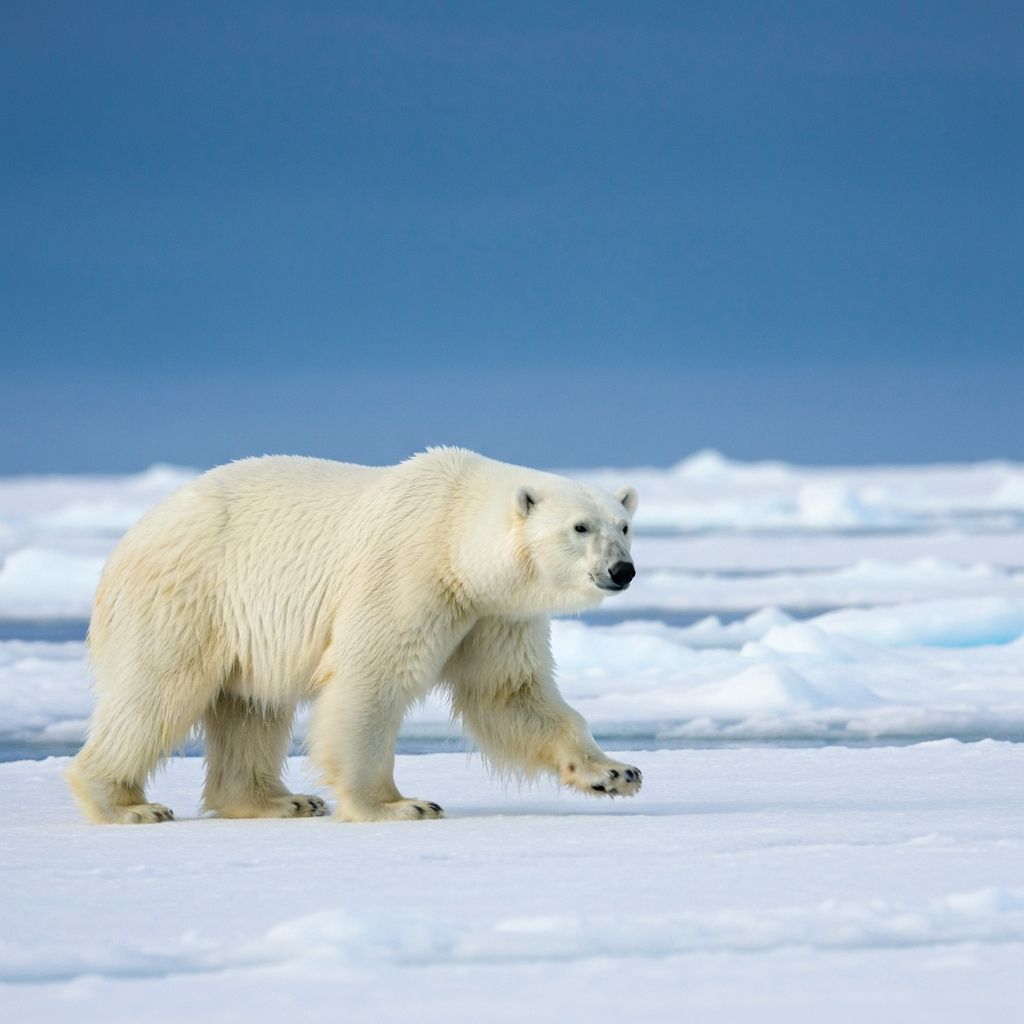
Polar Bear
Ursus maritimus
The iconic symbol of the Arctic, polar bears are the world's largest land carnivores. Nunavut is home to a significant portion of Canada's polar bear population, with bears found throughout the coastal regions where they hunt seals on sea ice.
Learn moreBarren-ground Caribou
Rangifer tarandus groenlandicus
Caribou are central to Inuit culture and survival. These remarkable animals undertake one of the longest land migrations of any mammal, travelling hundreds of kilometres between calving grounds and winter ranges.
Learn moreArctic Fox
Vulpes lagopus
With their thick white winter coats, Arctic foxes are perfectly adapted to Nunavut's harsh climate. They can withstand temperatures as low as -50°C and are known to follow polar bears to scavenge their kills.
Learn moreMuskox
Ovibos moschatus
These ancient animals have roamed the Arctic for thousands of years. Their thick, insulating qiviut wool is one of the warmest natural fibres on Earth, and they form defensive circles to protect calves from predators.
Learn moreArctic Wolf
Canis lupus arctos
The Arctic wolf is a subspecies of grey wolf that inhabits the Canadian Arctic. They hunt in packs and prey primarily on muskoxen, Arctic hares, and caribou.
Learn moreCanadian Lynx
Lynx canadensis
This elusive feline has large paws that act as natural snowshoes, allowing it to move across deep snow. Their primary prey is the snowshoe hare, and their populations closely follow hare population cycles.
Learn moreMarine Life
Nunavut's extensive coastline and Arctic waters host an abundance of marine mammals. The seasonal movement of sea ice creates productive feeding areas where upwelling nutrients support rich food webs from plankton to the largest whales.
Narwhal
Monodon monoceros
Known as the "unicorn of the sea," narwhals possess a distinctive spiral tusk that can grow up to 3 metres long. Nunavut waters host the majority of the world's narwhal population.
Learn moreBeluga Whale
Delphinapterus leucas
These social, vocal whales gather in large groups in Nunavut's bays and estuaries during summer months. Their white coloration and flexible necks make them easily recognizable.
Learn moreBowhead Whale
Balaena mysticetus
Bowhead whales can live over 200 years, making them the longest-lived mammals. They have the thickest blubber of any whale and can break through sea ice up to 60 cm thick.
Learn moreWalrus
Odobenus rosmarus
Walruses use their iconic tusks for hauling out onto ice, establishing dominance, and creating breathing holes. They feed primarily on clams and other bottom-dwelling invertebrates.
Learn moreRinged Seal
Pusa hispida
The smallest and most common Arctic seal, ringed seals are the primary prey of polar bears. They maintain breathing holes in the ice and give birth in snow caves called lairs.
Learn moreBirds
Each spring, millions of birds migrate to Nunavut to take advantage of the brief but productive Arctic summer. The territory's wetlands, coastlines, and tundra provide critical nesting habitat for waterfowl, shorebirds, and raptors from around the world.
Rock Ptarmigan
Lagopus muta
Nunavut's territorial bird, the rock ptarmigan changes from mottled brown in summer to pure white in winter. Unlike most Arctic birds, it remains in Nunavut year-round.
Learn moreSnowy Owl
Bubo scandiacus
These powerful predators hunt primarily lemmings and can consume up to 1,600 per year. Their numbers in Nunavut fluctuate with lemming population cycles.
Learn morePeregrine Falcon
Falco peregrinus
The fastest animal on Earth, peregrine falcons can reach speeds over 320 km/h during hunting dives. They nest on cliffs throughout Nunavut during the breeding season.
Learn moreSnow Goose
Anser caerulescens
Millions of snow geese nest in Nunavut's coastal lowlands each summer. Their large colonies can significantly impact local vegetation through intensive grazing.
Learn moreConservation & Wildlife Management
Co-Management Approach
Wildlife management in Nunavut operates through a unique co-management system established by the Nunavut Land Claims Agreement. The Nunavut Wildlife Management Board (NWMB) serves as the main instrument of wildlife management, incorporating both scientific research and Inuit Qaujimajatuqangit (traditional knowledge).
Regional Wildlife Organizations and Hunters and Trappers Organizations work at the community level to ensure sustainable harvesting practices while respecting Inuit rights and traditions.
Climate Change Impacts
The Arctic is warming at nearly four times the global average rate, creating significant challenges for Nunavut's wildlife. Sea ice loss affects polar bears and ice-dependent seals, while changing vegetation patterns impact caribou migration and calving success.
Research partnerships between Inuit communities, government agencies, and academic institutions are working to monitor these changes and develop adaptive management strategies.
Interested in Wildlife Viewing?
Nunavut offers exceptional opportunities to observe wildlife in their natural habitat. Learn about responsible tourism practices and the best times to visit.