Loading...
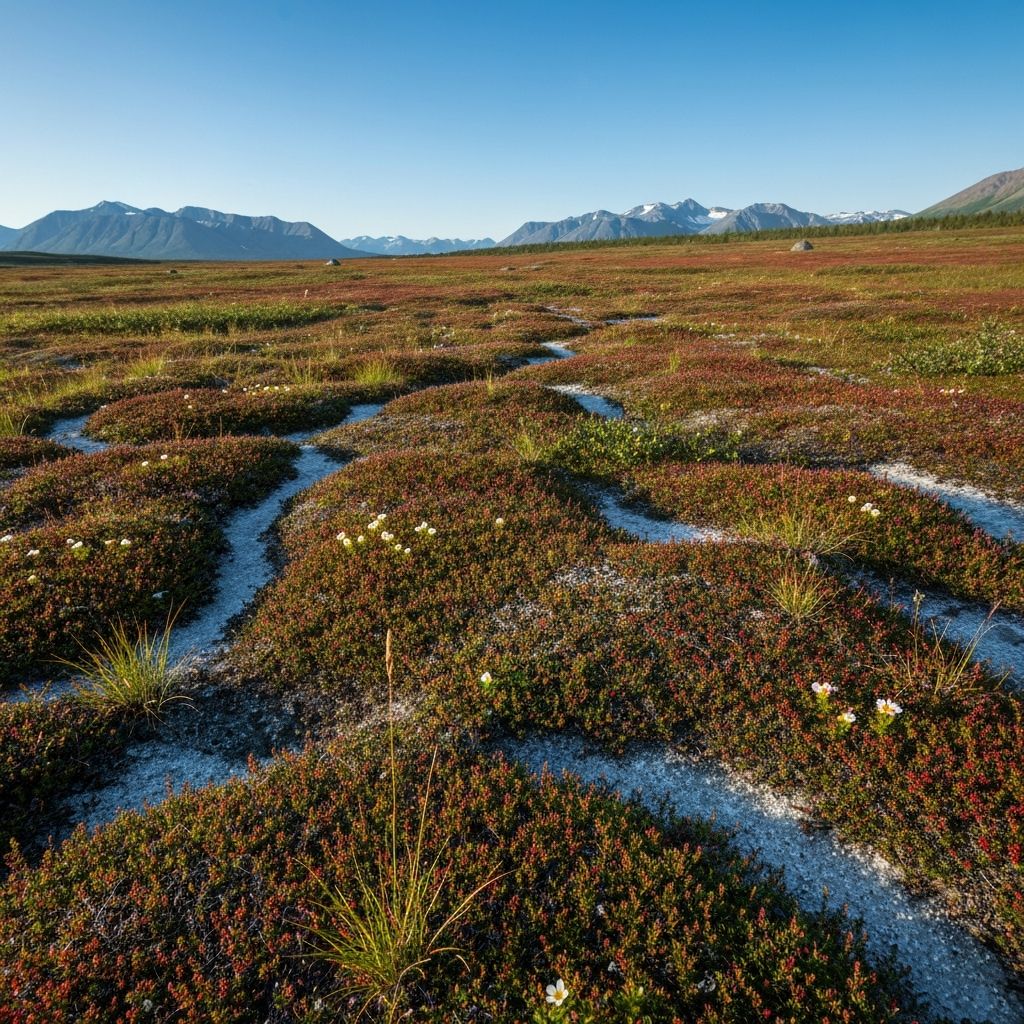
Arctic Ecosystems
Nunavut Environment
The Arctic tundra of Nunavut presents one of Earth's most unique and challenging environments. Shaped by extreme cold, permafrost, and dramatic seasonal light variations, this landscape supports remarkably adapted life forms and plays a crucial role in global climate systems.
Arctic Climate
Nunavut experiences an extreme Arctic climate characterized by long, bitterly cold winters and brief, cool summers. The territory spans three climate zones, from the milder southern regions influenced by Hudson Bay to the polar desert conditions of the High Arctic islands.
Winter temperatures regularly fall below -40°C, while summer temperatures rarely exceed 15°C even in the warmest locations. The dramatic variation in daylight—from 24-hour darkness in winter to 24-hour sunlight in summer—profoundly affects all life in the region.
Precipitation is surprisingly low, with most areas receiving less than 300mm annually—comparable to many deserts. However, the low evaporation rates mean moisture persists, creating the characteristic wetland tundra during summer months.
Seasonal Overview (Iqaluit)
January
Avg: -32°C0-4 hrs
April
Avg: -18°C14-18 hrs
July
Avg: 8°C20-24 hrs
October
Avg: -8°C8-12 hrs
Note: Temperatures and daylight hours vary significantly across Nunavut's vast territory. High Arctic locations experience more extreme conditions.
Landscape & Permafrost
Permafrost
Beneath Nunavut's surface lies permanently frozen ground that can extend hundreds of metres deep. In summer, only the top layer (active layer) thaws, creating unique drainage patterns and challenging conditions for construction. Permafrost acts as a massive carbon reservoir—its stability is crucial to global climate.
Landforms
The landscape includes ancient rock of the Canadian Shield, rolling tundra plains, dramatic fjords carved by glaciers, and polar desert islands. Permafrost creates distinctive features like pingos (ice-cored hills), patterned ground, and thermokarst lakes formed by thawing ice.
Glaciers & Ice Caps
The mountainous regions of Baffin, Devon, and Ellesmere Islands contain significant ice caps and glaciers. These ice masses are remnants of the last ice age and are important indicators of climate change, with many showing accelerated retreat in recent decades.
Sea Ice
Sea ice is a defining feature of Nunavut's coastal environment. It provides critical habitat for marine mammals, hunting platforms for Inuit, and transportation routes between communities. The extent and duration of sea ice coverage is decreasing due to climate change.
Arctic Vegetation
Despite harsh conditions, Nunavut supports a surprising diversity of plant life. Arctic plants have evolved remarkable adaptations: growing low to avoid wind, developing deep roots in shallow soil, and completing their entire reproductive cycle in a few brief weeks of summer. Many plants grow in protective clusters, creating microenvironments several degrees warmer than surrounding areas.
Arctic Willow
One of the northernmost woody plants on Earth, the Arctic willow grows only a few centimeters tall, spreading along the ground to avoid harsh winds.
Learn morePurple Saxifrage
Nunavut's territorial flower, the purple saxifrage is one of the first plants to bloom in spring—often emerging through snow.
Learn moreCotton Grass
Not actually a grass but a sedge, cotton grass is recognized by its distinctive white, cotton-like seed heads that dot the summer tundra.
Learn moreArctic Poppy
The Arctic poppy's bowl-shaped yellow flowers are heliotropic—they follow the sun across the sky to maximize heat absorption.
Learn moreReindeer Lichen
Also called caribou moss, this lichen forms a critical winter food source for caribou. Lichens can survive complete desiccation and extreme cold.
Learn moreLabrador Tea
An aromatic evergreen shrub with leathery leaves that has been used for centuries by Indigenous peoples to make a traditional tea.
Learn moreWater Systems
Lakes & Rivers
Nunavut contains thousands of lakes and numerous river systems. The Thelon and Back rivers are among the longest, draining vast areas of the interior. Most water bodies are frozen for 8-10 months of the year, but summer thaw creates an intricate network of wetlands, ponds, and streams that support abundant life.
Marine Waters
Nunavut is bordered by Hudson Bay, Baffin Bay, the Arctic Ocean, and numerous channels and straits. These cold, nutrient-rich waters support productive ecosystems. Seasonal ice edges and polynyas (areas of open water surrounded by ice) are particularly important feeding areas for marine mammals and birds.
Climate Change in the Arctic
The Arctic is warming at nearly four times the global average rate, making Nunavut a frontline region for climate change impacts. Sea ice extent has declined dramatically, permafrost is thawing, and weather patterns are becoming less predictable. These changes affect wildlife, traditional harvesting practices, infrastructure, and community safety. Nunavummiut and scientists are working together to document changes and develop adaptation strategies, combining Inuit Qaujimajatuqangit (traditional knowledge) with modern research methods.
Explore Nunavut Wildlife
Discover the remarkable animals that have adapted to thrive in Nunavut's challenging Arctic environment.